


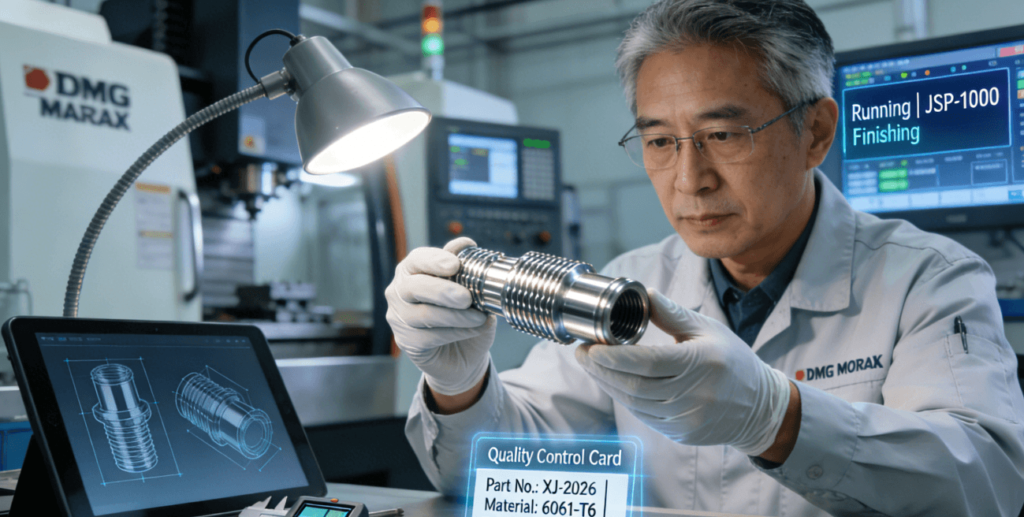
In today’s highly competitive machining world, engineering and purchasing managers often face the impossible question of how to balance ultimate machining accuracy, cost constraints, and delivery schedule assurance. This impossible triangle makes decision-making a challenging task. The wrong selection of a supplier may result in immediate non-conformance of parts, delays, and cost overruns.
The underlying problem with the selection process is based solely on the quoted price, without considering the complex technical capabilities and supply chain reliability of the machining process. To overcome this challenge, this article will offer a clear five-step evaluation process, discussing key criteria ranging from tolerance capability to international certification, helping readers make the right selection of suppliers. To understand the process of making the best selection, we need to begin with the most basic technical criteria.
What is True Precision CNC Turning? How are Tolerances and Surface Finish Defined?
The term “precision” is sometimes abused in marketing, but when talking about CNC turning, precision has hard numbers attached to it. True precision machining is all about controlling dimensions at a level that is measurable in terms of microns.
Quantifying Tolerance: Understanding “Precision” Through ISO Standards
Precision is initially defined by tolerance. ISO 2768 is a standard that sets tolerance grades, with commercial-grade Precision CNC Turning implying that we can consistently achieve a tolerance level of ±0.01mm to ±0.025mm. Even tighter tolerance levels can be achieved by using a high precision CNC turning center with ultra-tight tolerance levels of ±0.005mm or better.
The Functional Significance of Surface Finish
Precision is not just limited to dimensions but also applies to surfaces. The surface finish, as determined by Ra values, plays a significant role in determining the functionality of a part. For example:
- Sealing and Friction:
Hydraulic valve blocks must be able to seal with very low Ra values, while bearing surfaces must have the right level of roughness to provide the best oil film. - Fatigue Strength and Aesthetics:
A smoother surface minimizes the number of stress concentration locations, thereby improving the fatigue strength of the part. At the same time, the higher the quality of the finish, the higher the quality of craftsmanship.
The Hardware Behind High Precision
It’s difficult to obtain and maintain these specifications, but it’s heavily dependent on the rigidity, thermal stability, and dynamic accuracy of the high precision CNC turning center. As the Society of Manufacturing Engineers (SME) puts it, “The ability of the machine to maintain accuracy over long periods of time is more important than the static accuracy.” It’s also important to note that advanced tooling technology, cooling technology, and the wealth of the process database are the keys to high precision output. To get an in-depth look at the rationale behind the decision to choose precision turning or milling depending on the geometry, this guide on precision CNC turning provides an expert’s point of view.
Beyond Aluminum and Stainless Steel: What Other High-Performance Materials are Suitable for Precision Turning?
Besides the usual 6061 aluminum and 304 stainless steel, industries like aerospace, medical, and energy are turning to machining of challenging materials. Titanium alloys (e.g. Ti-6Al-4V) are great mechanically and biologically, but low heat conductivity and chemical reactivity of titanium are critical challenges for choosing the efficient tooling and cutting parameters. Nickel-based superalloys (e.g. 718) still maintain good strength at high temperatures, but their natural tendency to work harden requires the implementation of special chip breaking strategies and the use of high rigidity machines.
Moreover, high-performance polymers like PEEK plastic are also important in the field of non-metallic materials. PEEK plastic is an excellent choice for making precision medical and semiconductor components owing to its corrosion resistance and self-lubricating properties. The machinability of various materials is quite different. For instance, cast copper alloys are soft and good conductors of heat, but they have a tendency of sticking to the tools, on the other hand, cold-rolled steel is hard and abrasive. Even with these materials, machining is accompanied by high cutting forces, thermal deformation due to the heat generated, and fast tool wear. Hence, the extent of the material library, the experience of machining and the provision of customized process packages based on specific materials available at a supplier are essential factors that determine the outcome of precision CNC turning parts.
From Prototype to Production: How Does On-Demand Manufacturing Optimize the Supply Chain?
In an ever-changing market environment, traditional batch manufacturing practices have been leading to inefficient inventory management and stockouts. On-Demand Manufacturing, enabled by advanced precision CNC turning services, is now essential in the creation of resilient supply chains. This “Make-To-Order” strategy optimizes flexibility in manufacturing through digital platforms and smart scheduling. Businesses can reduce inefficient inventory costs and speed up product development with economical batch sizes.
They can react quickly to emergency situations and changing demand with rapid response capabilities. To support such an implementation strategy, there is a need for smart manufacturing capabilities in the supplier, which includes instant quoting and scheduling, and flexible manufacturing cells. With robust logistics in place, leading precision CNC turning services firms have become an extension of their clients’ operations.
What Do IATF 16949 and AS9100D Certifications Mean for Turned Parts?
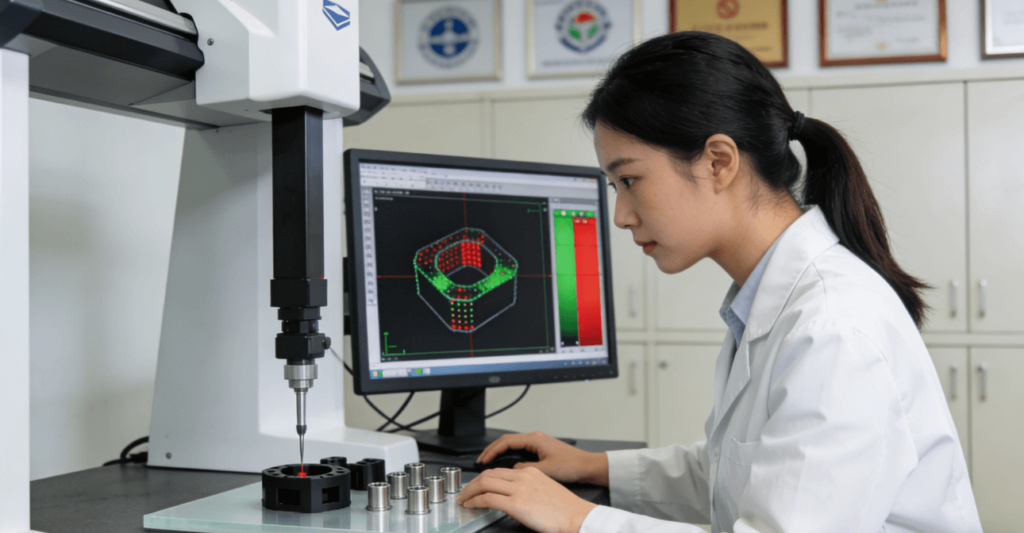
These are not merely certificates hanging on the wall. They represent a quality culture and the depth of management. In CNC Protolabs Manufacturing Services, certain industry certifications are a “passport” for suppliers to access the high-end markets.
IATF 16949 (Automotive Industry) and AS9100D (Aerospace Industry) are the “crown jewels.” The essence of IATF 16949 is defect prevention and continuous improvement. It ensures control of all steps, from design to mass production, through tools such as APQP (Advanced Product Quality Planning) and PPAP (Production Part Approval Process), which go far beyond the basic requirements of ISO 9001. AS9100D combines risk management and traceability into the quality management system. The International Aerospace Quality Group (IAQG) states, “This standard is focused on reducing supply chain risk, ensuring every single part, no matter how small, is fully traceable (material source, machining parameters, inspection results, etc.). This is a safety issue for flight.”
Choosing a certified supplier is not merely selecting a supplier, it is selecting a quality system guarantee. Being certified for ISO 9001, IATF 16949, AS9100D, and ISO 14001 demonstrates not only the full qualification for supplying top-tier clients in the automotive and aerospace industries, but also the commitment to quality, reliability, and sustainable development.
How to Evaluate the Comprehensive Capability of a CNC Turning Service Provider?
While technical hardware is the foundation, soft power is the key to long-term partnerships. In evaluating a CNC turning services provider, a due diligence checklist is essential, going beyond the price quote.
Evaluating the Depth of the Supplier’s Technical and Communication Capabilities
The depth of the questions asked during initial contact is vital. A qualified supplier is proactive in providing their Design for Manufacturability (DFM) analysis, providing professional advice on tolerance rationality, material selection, and process optimization, instead of passively accepting orders. Communication protocols and a point of contact are essential in project communication efficiency.
Evaluating the Supplier’s Equipment and Quality Assurance Capabilities
“A craftsman must sharpen his tools first.” In addition to assessing the supplier’s high precision CNC turning centers, their inspection capability is a better measure of their quality attitude. Are their high-precision CMMs, profilometers, and surface roughness testers on hand? In addition, in cases where parts are complex, is CNC milling and turning a combined machining capability available to perform multiple operations in one setup? This hardware is the physical endorsement of their precision promises.
Verification: Seeing is Believing
Where possible, a two-step verification is recommended:
- Request Samples:
The most direct method of evaluating a supplier’s process stability and precision retention capability is the production of a small batch of samples. - Conduct a Visit:
A physical or “virtual factory” tour offers a glimpse of the production environment, equipment maintenance, and on-site management standards.
In the end, it is necessary to comprehensively evaluate their technical responsiveness, quality system, delivery history, and cooperative sincerity. In order to gain a deeper understanding of how a leading service provider integrates these capabilities to offer end-to-end professional CNC turning services, this could be the next step in your evaluation journey.
Conclusion
Selecting a precision CNC turning partner is a very holistic decision that combines both engineering expertise and strategic vision. It is much more than just comparing unit prices and requires a complete review of the supplier across five key aspects: technical precision, materials science, production models, quality systems, and comprehensive service capability.
By using the structured five-step framework proposed in this essay, decision-makers can easily cut through the marketing hype to recognize partners with real, deep expertise, and at the same time, they can substantially lower the risk of the project and ensure that the final delivery of the parts is of high performance and fully meets their expectations.
Author Bio
This article is the result of the efforts of a precision manufacturing consultant who has more than 15 years of experience in CNC Protolabs and is specialized in linking advanced manufacturing technologies with industrial applications. Besides, this consultant has given supply chain optimization solutions to several Global 500 companies.
FAQs
Q: What tolerance levels can typically be achieved with precision CNC turning?
A: Commercial-quality precision turning backed by state-of-the-art CNC lathes and continuous process monitoring can usually achieve tolerances as close as 0.01mm to 0.025mm on a regular basis. When there are very demanding applications, some vendors can even provide ultra-high precision as fine as 0.005mm.
Q: How should one choose between turning and milling?
A: It mainly depends on the shape of the parts. Turning is the approach to use when machining shafts, sleeves and other round parts, as the workpiece is rotated. Milling is for prismatic parts with pretty much any kind of features: complex contours, slots or holes. There is quite a big number of complicated parts that require combined turning and milling operations.
Q: Where do the main price differences between small-batch prototyping and mass production come from?
A: The biggest difference is in how the programming and setup time costs are factored per item. During the prototyping stage this cost share is very high. However, in mass production this cost is spread out, while at the same time aspects such as material utilization and tooling are optimized, which results in a drastic decrease in the unit price.
Q: Why is IATF 16949 certification important for automotive parts purchasing?
A: The automotive industry considers the IATF 16949 certification as a basic requirement. It demonstrates that the supplier has made a quality management system that is very effective and covers the prevention of defects, the improvement cycle, and the requirements specific to the customer, in such a way that the supplier is always producing mass parts of good quality and reliably.
Q: How can I ensure timely delivery from an overseas precision machining supplier?
A: Studying the supplier’s capability in supply chain management is important, such as raw materials inventory, production scheduling systems, and international logistics partnerships. One can reduce the risk of delays by selecting a supplier with end-to-end services, who can provide clear logistics tracking and have support teams on-site or in the local areas.