


The 2019/20 Ligue 1 season offered exceptional opportunities for bettors who looked beyond traditional powerhouses and focused on fundamentally organized smaller clubs. Market pricing in French football frequently relies on historical brand perception, routinely undervaluing disciplined, lower-budget sides that construct solid defensive floors. When smaller clubs establish tactical consistency, the Asian handicap and total goals markets often fail to adjust quickly enough, opening a window of sustained pricing inefficiency.
Market Inefficiencies in French Football Pricing Models
Mainstream bookmakers tend to inflate spreads on mid-to-lower tier fixtures based purely on wage disparity and squad depth. In a low-scoring competition like Ligue 1, defensive organization and tactical discipline frequently compress the actual performance gap between wealthy clubs and disciplined minnows. This dynamic produces inflated plus-handicap prices for well-coached underdogs facing volatile favorites.
When public interest concentrates heavily on high-profile teams, odds compilers shade numbers to balance liabilities rather than reflect pure statistical probabilities. Sharp analytical practitioners who identify clubs outperforming their underlying expected goals against (xGA) metrics gain a mathematical edge over recreational market consensus before systemic adjustments occur.
Stade de Reims and the Science of Defensive Solidity
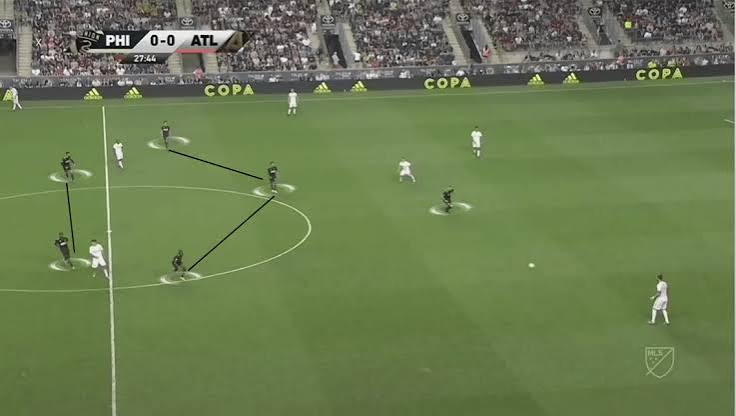
David Guion constructed Stade de Reims into Europe’s most disciplined defensive unit during the 2019/20 campaign, conceding just 21 goals in 28 matches. Their compact 4-4-2 mid-block systematically denied central penetration, forcing elite opponents into low-percentage crosses that Reims’ center-backs neutralized effortlessly.
Rather than chasing possession, Reims intentionally surrendered the ball to compress space in their own half. This tactical design produced an extraordinary record against the league’s top sides, including away victories over Paris Saint-Germain and Lille.
Defensive Structuring Under Positional Pressure
Reims developed a distinct spatial control model designed specifically to exploit impatient favorites who overcommit numbers forward in attack:
- Immediate retreat into a narrow horizontal defensive line upon losing possession
- High pressure triggers restricted strictly to wide areas outside the penalty arc
- Strategic fouling in transition to disrupt opposing momentum before dangerous phases develop
- Rapid vertical counter-attacks targeted through isolated wide wingers to generate set pieces
This structured approach explains why Reims consistently covered narrow handicap lines throughout the season. Their defensive ceiling was high enough to guarantee low-margin contests, making them a premier selection in Asian handicap and under-total positions.
Angers SCO: Set-Piece Precision and Structural Resilience
Stéphane Moulin’s Angers SCO represented another textbook example of a modest squad maximizing value through specialized phases of play. Angers consistently ranked near the top of the division in expected goals generated from set-piece routines, providing them with reliable scoring outlets even in matches where they were outplayed in open play.
Their physical presence and structured pressing made them particularly resilient on home soil, where larger clubs struggled to find passing rhythm. Tracking weekly price shifts across an established sports betting service such as ufabet168 underscored how long it took sportsbooks to adjust baseline lines for Angers, whose physical dominance in set-piece scenarios frequently turned tight games in their favor.
Statistical Divergence Across Prominent Lower-Tier Performers
Evaluating underdogs requires differentiating between genuine structural quality and short-term finishing luck. A comparison of defensive conceded totals and handicap cover rates highlights which smaller sides offered sustainable return profiles over the 28-game sample.
The data below illustrates how tactical profiles directly influenced market cover percentages across distinct competitive tiers:
| Club Name | Goals Conceded / Match | Clean Sheet Rate | Asian Handicap Win Rate | Primary Strength |
| Stade de Reims | 0.75 | 42.8% | 60.7% | Positional mid-block |
| Angers SCO | 1.18 | 35.7% | 53.6% | Set-piece efficiency |
| Stade Brestois 29 | 1.32 | 28.5% | 50.0% | Home-ground intensity |
| FC Metz | 1.25 | 28.5% | 46.4% | Low-block counter |
This breakdown clarifies why defensive consistency is the primary driver of spread profitability. Reims delivered elite covering numbers because their defensive floor rarely collapsed, whereas clubs relying on transitional pace experienced wider performance swings against varied tactical profiles.
Brest and the Home-Field Discrepancy
Stade Brestois 29 demonstrated how intense home environments can distort conventional team quality ratings in favor of newly promoted sides. Playing at the Stade Francis-Le Blé, Brest played with a high-tempo directness that unsettled visiting favorites accustomed to slower tactical paces.
Their home form carried an otherwise limited squad to mid-table safety before the campaign was halted. Recognizing extreme home-versus-away performance divergence remains one of the simplest methods for extracting value on newly promoted underdogs priced as generic relegation fodder.
Systemic Traps: Identifying False Underdogs
Not every modest Ligue 1 club in 2019/20 offered reliable underdog value. Teams like Toulouse FC and Amiens SC possessed fatal defensive deficiencies that made supporting them on positive handicaps systematically unprofitable. Both sides lacked central midfield resistance, regularly conceding high-quality chances on turnovers.
When wagering strategies incorporate alternative gaming verticals found within a modern casino online website, discipline and probability modeling remain mandatory: backing weak football teams simply because their moneyline odds look appealing represents a fundamental misreading of risk, as structurally broken defenses rarely sustain positive variance over time.
Tactical Contexts That Limit Underdog Viability
Even disciplined underdogs face failure scenarios when match dynamics force them outside their preferred game state. If a defensive side concedes within the first fifteen minutes, their entire game plan collapses, forcing them to open spaces and attack opponents equipped with superior transition athletes.
Bettors evaluating smaller teams must identify whether the underdog possesses the technical ability to chase a game without suffering catastrophic defensive breakdown. Teams with one-dimensional counter-attacking identities face exponential risk when trailing early, converting narrow expected defeats into heavy margin losses.
Summary
The 2019/20 Ligue 1 season reinforced that value-driven football analysis relies on identifying defensive structure rather than brand reputation. Underdogs like Stade de Reims and Angers SCO delivered consistent market profitability by mastering high-floor defensive tactics and specialized set pieces that neutralized opponent talent advantages. Conversely, unorganized sides like Toulouse proved that high pricing alone does not constitute betting value without underlying structural stability.