

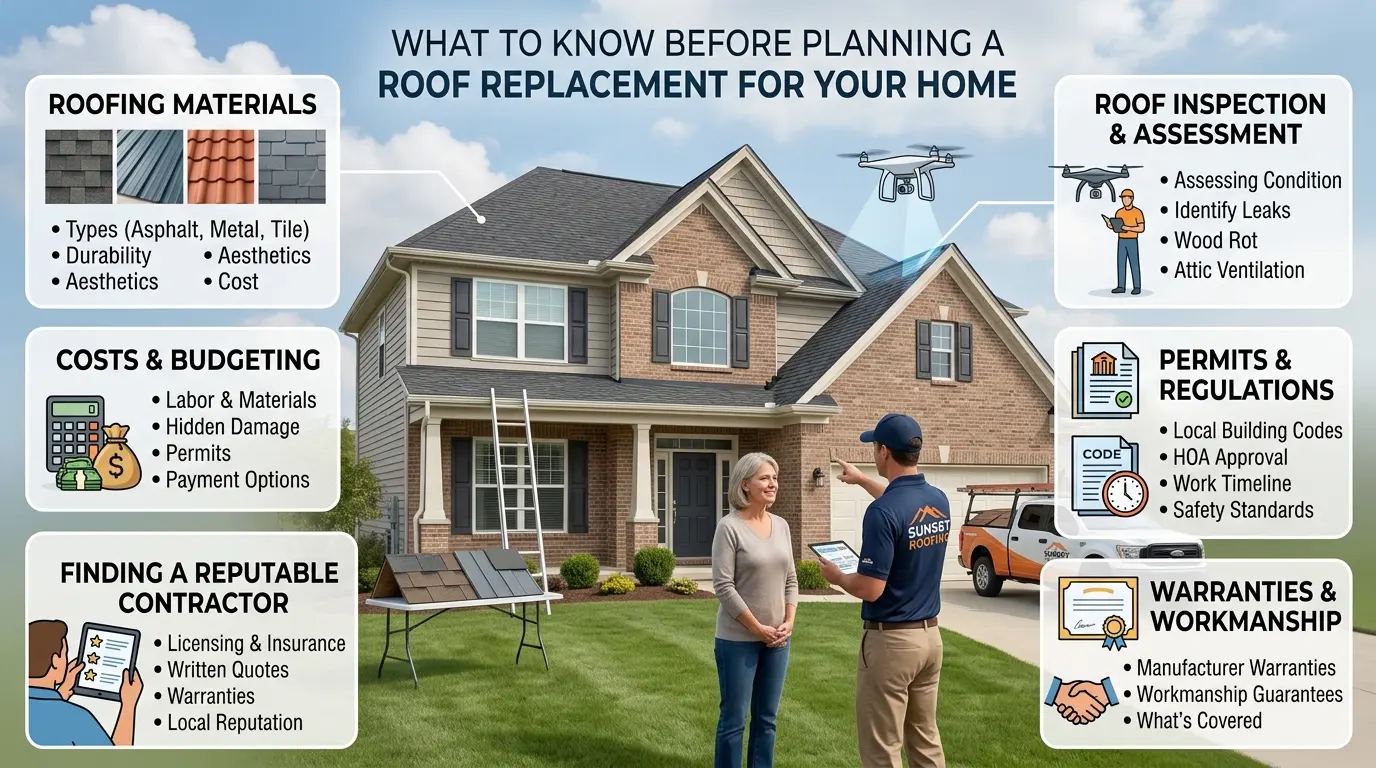

Replacing a roof is not something most homeowners do often, which makes the process feel unfamiliar when the time finally comes. A roof affects curb appeal, energy efficiency, home protection, resale value, and long-term maintenance costs. Making thoughtful decisions before the project begins can help you avoid stress and choose a solution that fits your home for years.
Why Roof Replacement Should Be Planned Carefully
A roof is more than a layer of shingles. It is a complete system that includes decking, underlayment, flashing, ventilation, gutters, and drainage. When one part fails, other areas of the home can be affected.
A rushed roof replacement can lead to:
- Poor material choices
- Ventilation problems
- Premature leaks
- Higher long-term repair costs
- Lower curb appeal
- Warranty confusion
Planning ahead helps homeowners understand what they are paying for and why each step matters.
Signs It May Be Time for a New Roof
Some roofing issues can be repaired, but others indicate the roof may be near the end of its service life. Homeowners should pay close attention to visible changes, especially after storms or long periods of harsh weather.
Common warning signs include:
- Shingles that are curling, cracking, or missing
- Dark streaks or heavy staining
- Frequent leaks in different areas
- Soft or sagging roof sections
- Granules collecting in gutters
- Daylight showing through attic boards
- Rising energy bills without a clear reason
One small leak does not always mean a full replacement is needed. However, repeated problems usually suggest a deeper issue with the roof system.
Choosing the Right Roofing Materials
Material selection is one of the most important parts of a replacement project. The best choice depends on budget, climate, home style, and long-term expectations.
Asphalt Shingles
Asphalt shingles remain popular because they are affordable, versatile, and available in many colors. They work well for many residential properties and can complement a wide range of home designs.
Architectural Shingles
Architectural shingles are thicker and more dimensional than standard shingles. They often provide a more polished appearance and may offer better durability.
Metal Roofing
Metal roofing can be a strong option for homeowners who want longevity and weather resistance. It can also help with energy performance when installed correctly.
Specialty Roofing Options
Some homeowners consider synthetic, slate-style, or premium materials for a more distinctive look. These options may cost more upfront but can add unique character to the property.
The Role of Ventilation and Insulation
Many homeowners focus only on the exterior appearance of a new roof, but ventilation and insulation are just as important. Without proper airflow, heat and moisture can build up in the attic.
Poor ventilation may cause:
- Mold or mildew concerns
- Premature shingle aging
- Higher cooling costs
- Moisture damage to wood
- Ice-related issues in colder conditions
A roof replacement is an ideal time to evaluate whether the attic has balanced intake and exhaust ventilation. Improving airflow during installation can help the new roof perform better over time.
Questions to Ask Before Hiring a Roofing Contractor
Choosing the right contractor is just as important as choosing the right material. A quality installation can extend the life of your roofing system, while poor workmanship can create problems almost immediately.
Before moving forward, homeowners should ask:
- What is included in the written estimate?
- Will damaged decking be replaced if discovered?
- What type of underlayment will be used?
- How will flashing be handled?
- What warranties apply to labor and materials?
- How will cleanup be managed?
- What is the expected project timeline?
Clear answers help reduce misunderstandings and make the process more transparent.
Budgeting Beyond the Basic Estimate
The lowest estimate is not always the best value. Roof replacement pricing can vary based on materials, roof pitch, size, labor, removal of old roofing, ventilation upgrades, and hidden damage.
Homeowners should budget for possible extras, such as:
- Replacing rotten decking
- Upgrading vents
- Repairing fascia or soffit
- Improving gutter drainage
- Adding better moisture barriers
A slightly higher upfront investment may save money later if it results in better materials, cleaner installation, and fewer repairs.
Why Local Experience Matters
Roofing needs can vary by region because weather patterns, humidity, storms, and building styles are different from one area to another. A contractor familiar with local homes can better recommend materials and installation methods suited to the area.
For homeowners comparing options, researching a best roofing company Peachtree City can provide a helpful starting point when evaluating local roofing knowledge, project standards, and service expectations.
Preparing Your Home for Installation Day
A roof replacement can usually be completed efficiently, but preparation makes the experience smoother.
Before work begins:
- Move vehicles away from the driveway
- Protect items stored in the attic
- Remove fragile wall decorations
- Keep pets and children away from work zones
- Clear patio furniture near the house
- Confirm access points with the contractor
Roofing work involves noise, materials, and debris. A little preparation helps protect your belongings and allows the crew to work safely.
Final Thoughts
A roof replacement is a major home improvement project, but it does not have to feel overwhelming. By understanding warning signs, comparing materials, asking the right questions, and planning for the full roofing system, homeowners can make confident decisions.
The best roof is not simply the one that looks good on installation day. It is the one that protects the home, supports energy efficiency, handles local weather, and delivers reliable performance for years to come.