

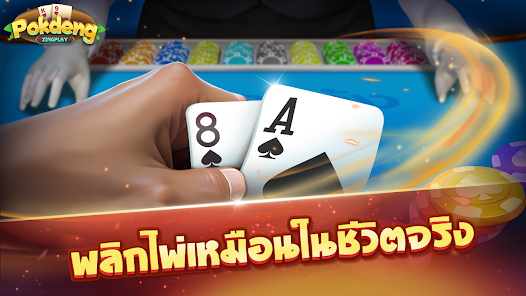

Pokdeng turns quick two- or three-card comparisons into a rapid contest built around reaching a total of nine, making it one of the most accessible and fast-moving Thai card games. When this structure moves into online casino formats, it keeps the same core logic but adds automated dealing, clear payouts, and continuous availability, which changes both the rhythm and the risk profile of typical sessions.
Why Pokdeng Fits Naturally Into Online Casino Formats
Pokdeng is traditionally played with a standard 52-card deck, where each participant competes against a central banker, aiming for a hand total closest to nine, with face cards and tens counting as zero. That simple scoring model mirrors the logic of baccarat and makes the game easy to digitize because hand evaluation and comparisons can be handled instantly by software without complex combinations.
The game’s rounds are also very short: players receive two cards, may take a third under certain conditions, and then immediately settle against the banker, which creates a natural loop for online environments where quick decisions and frequent outcomes keep people engaged. Once translated into digital form, this structure supports auto-play options, hand histories, and side-bet overlays without altering the underlying rules that made Pokdeng popular in physical gatherings.
Core Rules and How They Shape Decisions
In standard Pokdeng, numeric cards from 2 to 9 keep their face values, while tens and all picture cards contribute zero points, and aces count as one. Players add the values of their cards and only the last digit of the sum counts, so totals effectively wrap around in a modular fashion, making 9 the best total, followed by 8 and so on. The banker compares each player’s result against their own, paying out when the player’s hand is higher and collecting when it is lower, which frames every decision around beating a single opponent rather than the entire table.
Special patterns, sometimes known as “Pok,” occur when a player’s first two cards already total eight or nine, resulting in an immediate strong hand that usually stands without drawing and often receives priority in settlement. Some local variants also reward pairs, same-suit combinations, or other structural features with enhanced payouts, which adds another dimension when evaluating whether an early strong hand is profitable or merely adequate. These structural quirks influence how players perceive risk in the initial deal versus the potential benefit of taking a third card.
Mechanisms Behind Banker Advantage and Player Outcomes
Any game where one participant sits as banker inherently shifts the probability balance, because that role settles against multiple players and can benefit from structural rules about ties or card drawing. In many implementations, the banker either wins ties or at least avoids losses on equal totals, and this subtle rule gives the house or the designated banker a persistent edge over time. When moved online, the “banker” is usually the casino itself, but even peer-to-peer versions can embed a small structural fee or commission that converts this positional advantage into predictable revenue.
From the player’s perspective, this means that repeatedly taking the non-banker seat without any compensation (such as rotating banker roles in a home game) erodes expected value over a long sequence of rounds. The faster the game runs—which is common in digital formats—the more quickly this statistical edge compounds, making short-term streaks possible but long-term profit difficult without some offsetting rule or promotional structure.
Conditional Scenarios: When a Third Card Helps or Hurts
Drawing a third card in Pokdeng is not always mandatory; in many variants, the player decides whether to draw, while the banker follows rules based on their current total and the player’s actions. When a player already holds a reasonably strong total—say, 6, 7, or 8—the potential gain from drawing a third card is often lower than the risk of dropping to a weak total, because only certain card values improve the hand while many either leave it unchanged or reduce it after the modulo wraparound.
On the other hand, very low starting totals can justify aggressive drawing because the current position is already poor; the expected downside from remaining with a weak hand may outweigh the chance of marginally improving or even hitting a “Pok” total with the third card. Online implementations sometimes highlight recommended actions or automate drawing based on fixed rules, which can remove some human error but also nudges everyone into similar patterns, slightly reducing the scope for outplaying opponents through superior decision-making.
How Pokdeng Compares With Baccarat and Blackjack
The mathematical skeleton of Pokdeng resembles baccarat in that both ultimately compare totals modulo ten and treat face cards as zero, but Pokdeng typically introduces more flexible player decisions and regionally specific side patterns. Baccarat typically fixes drawing rules for both player and banker, while Pokdeng may grant players more input on whether to draw, especially in informal or semi-formal games, which changes both the psychological feel and the strategic conversation. This greater sense of agency can make Pokdeng feel more interactive, even if the underlying edge remains constrained by the banker’s position.
Compared with blackjack, Pokdeng is less about managing bust risk and more about navigating the wraparound logic of totals and the importance of early strong hands. Blackjack players track remaining high cards and worry about exceeding 21, whereas Pokdeng players focus on whether drawing improves their chances of landing in the narrow band of totals that meaningfully outperform the banker, especially 8s and 9s. The absence of multi-card strategic plays such as splits or doubles simplifies both learning and implementation for online environments, but also narrows the space for complex advantage play.
Odds Structure, Variance, and Session-Level Risk
Because each hand of Pokdeng resolves quickly and involves only a few cards, variance emerges mainly from streaks of wins and losses against the banker rather than from rare, extremely large payouts. Some online versions add multipliers for special combinations, such as three of a kind or same-suit triples, but these outcomes are relatively rare and usually play a smaller role than simply winning more comparisons than you lose across a session. This structure means that a player’s bankroll tends to fluctuate steadily rather than in dramatic spikes, although rapid hand speed can still lead to large cumulative swings.
The house edge depends on specific rules—tie treatment, side bets, and fee structures—but structural banker advantage generally ensures that long-term expectations are negative for non-banker seats. In an online casino, the high volume of hands per hour amplifies this statistical reality: even a modest edge compounds quickly when players cycle through dozens or hundreds of rounds in a single session. Understanding this compounding effect is central to aligning stake sizes with realistic expectations rather than treating short-term winning streaks as evidence of sustainable outperformance.
Bankroll Management Perspective for Fast Thai Card Rounds
From a bankroll management viewpoint, Pokdeng’s speed requires deliberate pacing to prevent unconscious escalation of risk. Each hand may feel trivial in isolation, but constant opportunities to bet again can quietly multiply total exposure over time, especially when players chase losses under the impression that a “correction” is due. Setting a predefined maximum number of hands or a fixed time window for Pokdeng play can help prevent sessions from drifting far beyond the original plan.
Another practical approach divides the bankroll into units that represent a small fraction of total funds—often 1–2% per hand—and resists the temptation to increase unit size after short-term wins. This framework reframes Pokdeng from a search for rapid double-or-nothing outcomes into a controlled sequence of low-impact decisions, where survival and consistency matter more than dramatic recoveries. For many players, this shift in perspective is the difference between a game that adds colour to an online casino session and one that silently erodes capital.
UFABET and Integrated Views of Thai Card Game Activity
In multi-product betting ecosystems, players often encounter Pokdeng alongside sports wagers, slots, and other table games under a single account and wallet. When a betting interface aggregates Pokdeng rounds with other activities in one transaction history—similar to what many users expect from a comprehensive service such as UFABET—it becomes easier to see how frequently funds cycle through this fast Thai card format compared with slower, event-based markets. That unified view supports more deliberate budgeting, because players can measure how much of their session variance originates from quick-fire card rounds rather than from longer, less frequent bets.
casino online Ecosystems and the Place of Pokdeng
As regional titles gain visibility, Pokdeng increasingly appears in broader digital gambling ecosystems where local games sit alongside global classics under shared lobbies. Within a large casino online website, the game often benefits from tutorials, free-play modes, and clearly displayed payout tables that help new players transition from curiosity to competent participation without needing prior exposure at physical tables. The ability to move seamlessly from Pokdeng to other formats—slots, baccarat, or poker—within the same interface reinforces its role as a bridge between local culture and the wider catalogue of international casino options.
Educational Perspective: Teaching Pokdeng for Applied Understanding
Treating Pokdeng from an educational perspective means structuring learning around cause–effect sequences rather than memorizing isolated rules. Instructors can begin by anchoring the idea of modulo-ten scoring and the priority of totals 8 and 9, then show how banker advantage and tie rules convert those mechanics into a predictable edge when many hands are played. Once learners grasp that connection, they can examine sample hand histories to see how drawing decisions, stake sizing, and session length interact to shape long-term outcomes.
A practical teaching progression might include a simple comparison table that aligns Pokdeng with baccarat and blackjack along key dimensions: objective, card values, decision freedom, and banker role. By framing the game in relation to formats many players already know, educators reduce cognitive load and highlight exactly where Pokdeng diverges—especially in its blend of speed, simplicity, and region-specific patterns. This comparative lens equips learners to approach online versions with a clearer mental model of both fun and risk.
Summary
Pokdeng earns its place in online casinos by combining a straightforward nine-point objective with rapid rounds and a banker-centered structure that adapts cleanly to digital implementation. The same features that make the game engaging—quick decisions, frequent hands, and strong early totals—also accelerate the impact of the house edge and call for disciplined bankroll management to keep sessions aligned with realistic expectations. When understood through an educational lens that connects rules, odds, and decision-making, Pokdeng becomes not just a popular Thai card game in online form, but a clear example of how local traditions can evolve into globally accessible casino experiences.