

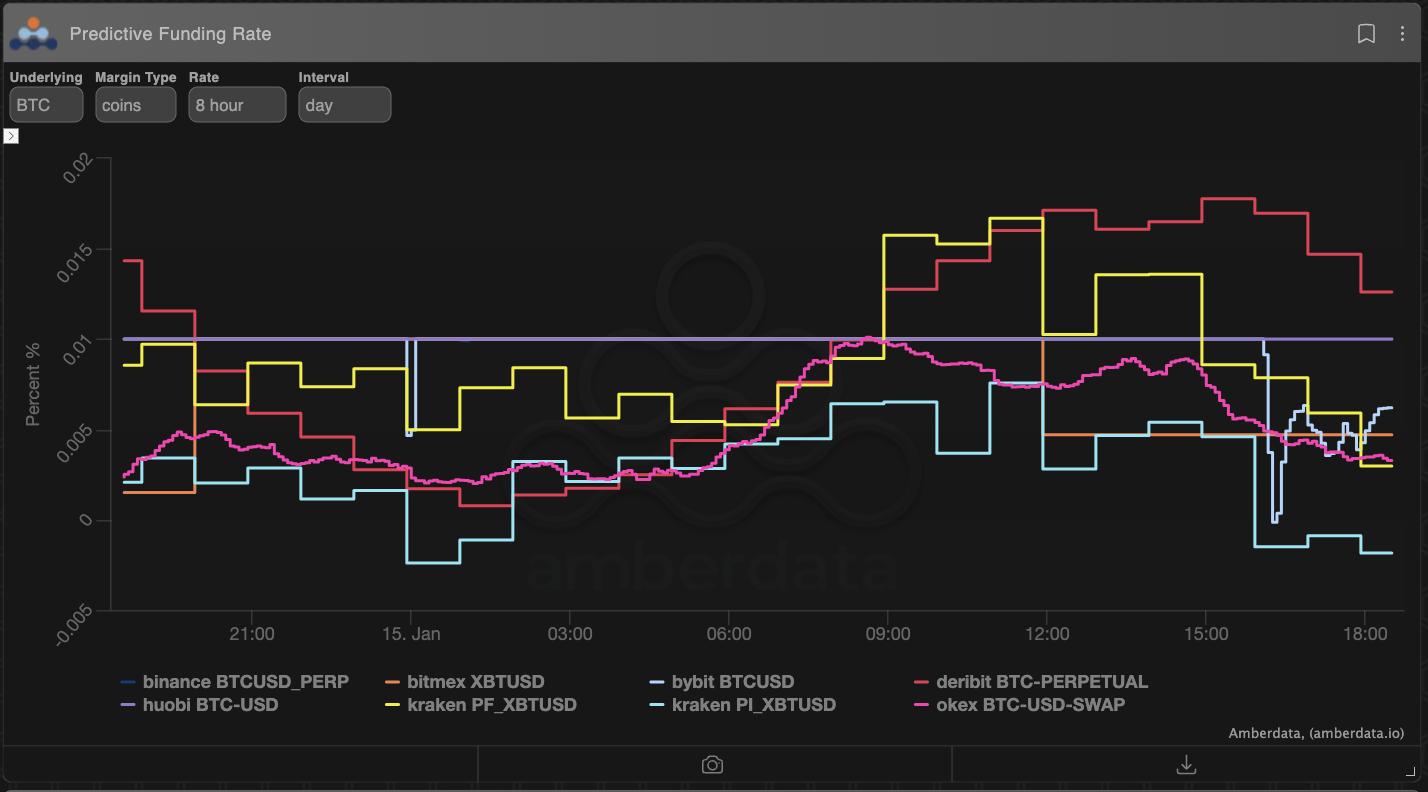

Perpetual futures have become one of the most actively traded instruments in the cryptocurrency market. Unlike traditional futures, they never expire, making them attractive for traders seeking continuous exposure to digital assets. However, this unique structure requires a mechanism to keep perpetual futures prices aligned with spot markets. This mechanism is called the funding rate.
Funding rates are not just a technical detail. They directly impact trader profitability, influence market sentiment, and can determine whether a position generates a return or ends up liquidated. As the perpetual futures market grows rapidly in 2025, understanding funding rates has become essential for anyone involved in crypto derivatives. This article provides a comprehensive look at how funding rates work, why they matter, and how traders can approach them effectively.
What Are Perpetual Futures Funding Rates?
Funding rates are periodic payments exchanged directly between traders in perpetual futures markets. Unlike traditional futures contracts that settle on fixed dates, perpetual futures remain open indefinitely. Without settlement, futures prices could drift far from spot prices. Funding rates act as a corrective force by incentivizing traders to balance the market.
- When perpetual futures trade above spot prices, funding rates are usually positive, meaning long traders pay shorts.
- When perpetual futures trade below spot prices, funding rates are often negative, meaning shorts pay longs.
This payment structure helps keep perpetual futures prices tethered to spot market levels while providing insight into market sentiment.
How Do Funding Rates Work in Practice?
Funding rates typically update every 8 hours, though some volatile trading pairs adjust every 4 hours. The rate is expressed as a percentage of the notional value of a position.
- Positive funding rate: Long positions pay short positions. This usually reflects a bullish market, where traders are willing to pay extra to maintain long exposure.
- Negative funding rate: Short positions pay long positions. This often signals a bearish outlook, as more traders anticipate declining prices.
For example:
- If BTCUSDT perpetual futures are priced above spot Bitcoin, funding will likely be positive, and longs will pay shorts.
- If ETH/USDT perpetual futures drop below the spot market, shorts may need to pay longs through negative funding.
This peer-to-peer system ensures that perpetual markets remain closely tied to spot prices without requiring contract expiration.
How Are Funding Rates Calculated?
Although formulas vary slightly across exchanges, funding rates typically combine two components:
- Interest rate: Reflects the relative cost of holding stablecoins versus cryptocurrencies.
- Premium index: Measures the difference between perpetual contract prices and spot market prices.
The general formula is:
Funding Rate = Premium Index + Clamp (Interest Rate – Premium Index)
At MEXC, funding rates apply differently depending on the contract type:
- USDT-M futures: Settled in USDT, with funding rates expressed as a percentage of USDT-denominated contract value.
- Coin-M futures: Settled in the underlying asset (such as BTC or ETH), where payments are denominated in the cryptocurrency itself.
In most cases, funding rates range between ±0.01% and ±0.03% every 8 hours. However, during periods of extreme volatility or strong directional bias, rates can spike significantly.
Why Funding Rates Matter for Traders
Funding rates influence more than just short-term costs. They play a central role in risk management and trading strategies.
Impact on Profitability
High funding rates can erode profits quickly. A trader holding a leveraged position during multiple funding intervals may find costs outweighing potential gains.
Effect on Liquidation Risk
For traders using high leverage, additional funding costs may bring them closer to liquidation levels, particularly if the market moves against their position.
Market Sentiment Indicator
Funding rates often serve as a proxy for trader sentiment:
- Sustained positive funding on pairs like Bitcoin USDT suggests over-leveraged long positions.
- Negative funding indicates heavy short positioning and bearish expectations.
By monitoring rates, traders can gauge crowd behavior and adjust strategies accordingly.
How to Trade Perpetual Futures Funding Rates
Understanding funding rates allows traders to incorporate them into strategic decisions. Here are some approaches:
1. Timing Entries
Entering positions just after a funding period can help avoid unnecessary costs. For example, if a rate is expected to be positive, traders may delay long entries until after the payment.
2. Arbitrage Opportunities
Some professional traders exploit discrepancies between spot and futures markets by arbitraging funding rates. While these strategies require significant capital and precision, they highlight how funding rates create market opportunities.
3. Risk Management
Traders should track historical funding rate patterns, particularly during high volatility periods. Maintaining awareness of potential costs can prevent unexpected losses.
4. Hedging with Dual Positions
Some strategies involve holding long and short positions simultaneously across different platforms or contracts to balance funding payments. While complex, this method can stabilize returns.
How to Check Funding Rates on MEXC
MEXC provides transparent access to funding rate data, making it easier for traders to stay informed:
- Real-time display: Funding rates are shown directly in the trading interface for each perpetual contract.
- Countdown timer: Indicates when the next funding interval will apply.
- Historical records: Traders can review past funding payments in their account history.
As of 2025, MEXC offers over 600 perpetual futures pairs, with funding rate adjustments typically occurring every 8 hours. This depth of market coverage, combined with strong liquidity, ensures competitive trading conditions for global users.
Local Relevance and Market Trends in 2025
Funding rates have become a critical focus for traders in 2025 due to:
- Increased volatility in meme coins and AI-related tokens listed on MEXC, which often produce extreme funding fluctuations.
- Institutional participation: More funds are actively trading perpetual futures, influencing funding dynamics through larger positions.
- Regulatory attention: Authorities in regions like the EU and Asia are examining derivatives markets more closely, making transparent funding mechanisms essential for compliance.
These trends emphasize the importance of monitoring funding rates as both a cost factor and a market signal.
Conclusion
Perpetual futures funding rates are more than a technicality. They are the backbone of how perpetual contracts remain aligned with spot markets. For traders, funding rates influence profitability, shape risk management, and provide valuable insight into market sentiment.
As the crypto derivatives market expands in 2025, mastering funding rate mechanics is crucial for anyone trading perpetual contracts. With tools and transparency provided by MEXC, traders can make informed decisions and optimize their futures strategies.
Ready to explore perpetual futures with confidence? Start trading on MEXC Futures and take advantage of transparent funding rate insights, 600+ contracts, and industry-leading liquidity.
Frequently Asked Questions (FAQ)
What are perpetual futures funding rates?
Funding rates are periodic payments exchanged between long and short traders to keep perpetual futures prices aligned with spot markets.
How often are funding rates charged?
Most perpetual futures apply funding rates every 8 hours, though some volatile pairs may update every 4 hours.
Who pays the funding rate?
When the funding rate is positive, long positions pay shorts. When the rate is negative, shorts pay longs.
Can funding rates impact profitability?
Yes. High funding rates can significantly reduce profits, especially for leveraged positions held across multiple funding intervals.
How can I check funding rates on MEXC?
Funding rates are displayed in real time on the MEXC trading interface, along with a countdown to the next interval and historical payment records.
Are funding rates predictable?
While exact values fluctuate, funding rates generally rise when markets are strongly bullish or bearish. Monitoring historical data and market sentiment can provide helpful context.